Skip to content

A question we get almost every week from guests planning their first trip sounds something like this. “We are thinking of July. Will Yerevan be unbearably hot?”
The honest answer is that it will be hot, but that is only half the story. Armenia is a country where two places three hours apart can feel like different seasons on the same afternoon.
This guide from Travel Door, a Tbilisi based DMC running trips across Armenia, Georgia and Azerbaijan, breaks down the best time to visit Armenia month by month and region by region, the way we actually plan it for guests rather than the way a generic weather chart presents it.
What Is the Best Time to Visit Armenia?
May and the September to early October window are the best overall months. Temperatures sit comfortably across Yerevan and the higher regions, mountain roads are clear, and every major site is accessible. July and August bring real heat to Yerevan, while December through February turn Gyumri and the highlands properly snowy.
Month by month quick reference
| Month | Yerevan temp | Rating | Best for |
| January | -8 to 1°C | Low season | Skiing, snowy monasteries, lowest prices |
| February | -5 to 7°C | Low season | Coldest month, reliable mountain snow |
| March | 1 to 14°C | Shoulder | Cheapest flights, quiet sites |
| April | 7 to 20°C | Good | Green landscapes, clear Ararat mornings |
| May | 11 to 25°C | Best | Wildflowers, wine festival, full access |
| June | 15 to 31°C | Best | Long daylight, high altitude sites open |
| July | 19 to 34°C | Mixed | Lake and mountain regions, festivals |
| August | 19 to 35°C | Mixed | Highland escapes, peak crowds |
| September | 14 to 30°C | Best | Harvest season, clear skies |
| October | 7 to 22°C | Best | Autumn colour, best photography |
| November | 0 to 13°C | Shoulder | Quiet, low prices, early mountain snow |
| December | -5 to 4°C | Festive | Christmas markets, ski season opens |
Why Armenia’s Regions Feel Like Different Climates

Armenia has a sharp continental climate, and elevation does most of the work here. The gap between regions is bigger than most first time visitors expect.
Yerevan’s lowland heat versus Gyumri’s mountain cold
Yerevan sits at around 900 metres. Gyumri sits at roughly 1,500 metres, and that 600 metre difference changes everything. In January, Yerevan averages around -3°C while Gyumri averages closer to -8°C, with records dipping far lower in extreme years.
The same gap works in reverse during summer. When Yerevan pushes past 34°C in July, Gyumri stays noticeably more comfortable, which is one reason our Gyumri City Tour works well in months when the capital feels heavy.
Why Dilijan and Lake Sevan run cooler than the capital
Dilijan and the shores of Lake Sevan sit high enough that they routinely run 10 to 15 degrees cooler than Yerevan on the same day. For a family struggling with a 35°C afternoon in the city, a day trip north is not just sightseeing, it is relief.
The highest sites open latest
Mount Aragats reaches 4,090 metres, the highest point in the country. Snow lingers on the upper slopes long after Yerevan has turned green, which makes the timing of our Amberd Fortress and Aragats route genuinely seasonal rather than year round. June through September is the reliable window for the higher approaches.
Spring in Armenia (March to May)
What the weather is actually like
March is a genuine transition month. Snow melts in the lowlands while mountain roads can still be difficult, particularly in the south toward Tatev. By April, Yerevan reaches a pleasant 13°C average, and May settles into the sweet spot at around 18°C mean, with daytime highs near 25°C.

March is also typically the cheapest month to fly into Armenia, which matters if budget drives your dates more than weather does.
Why May is considered the single best month
May is the month we recommend most often when a guest has flexible dates. The capital is warm but not hot. Higher altitude sites like Lake Sevan and Dilijan are fully comfortable. Mountain roads are clear, and the lowland monastery routes are at their most photogenic.
When Mount Ararat is actually visible
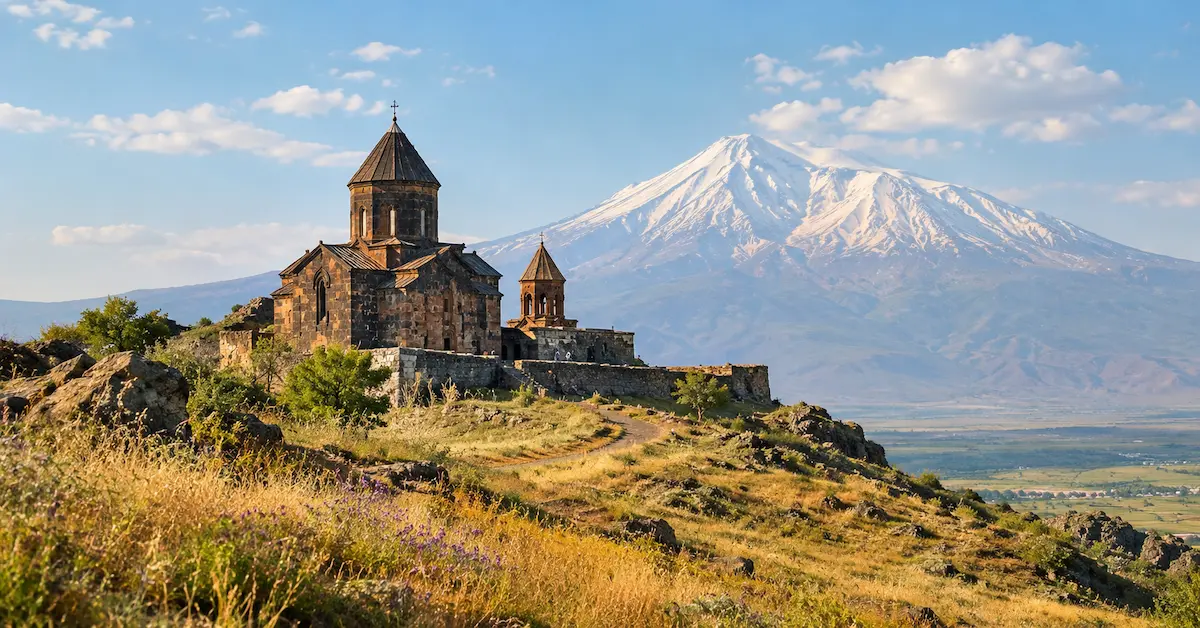
This is the detail we wish more people knew before booking. Ararat dominates the view from Khor Virap, but it is frequently hidden behind summer haze.
April, May and October mornings give you the best odds of a clear view. If that photograph is a specific reason you are coming, build the Khor Virap stop into an early morning in one of those months rather than a July afternoon.
Yerevan Wine Days and early May events
Early May brings Yerevan Wine Days, one of the country’s most popular festivals, when central streets fill with tasting stands. If wine is part of why you are coming, timing a trip to early May stacks the festival on top of the best weather of the year.
What we tell guests: May is also one of the wettest months in parts of the country. Pack a light rain layer even if the forecast looks clear when you book, because spring showers here arrive fast and pass just as quickly.
Summer in Armenia (June to August)

Yerevan’s heat, and why it surprises first time visitors
June eases in at around 23°C mean, but July and August are the real heat. Yerevan averages close to 27°C with highs regularly above 34°C, and the dry continental air makes midday sightseeing genuinely tiring.
This does not mean summer is a bad time to come. It means your itinerary needs to be built differently.
Dilijan and Lake Sevan as a summer escape
This is where that 10 to 15 degree gap earns its place. Our Lake Sevan and Dilijan Day Trip is our most requested summer route for exactly this reason. Guests swim, picnic by the lake, and walk through Dilijan’s forests in weather that feels nothing like the capital they left that morning.
A simple rule we use when planning July and August trips: city sightseeing early morning and evening, mountains and lake in the middle of the day.
Beating the crowds
Summer is peak season, particularly around Lake Sevan and the better known monasteries. Two habits make a real difference. Reach major sites before 9:30 in the morning, and schedule your busiest day for a Tuesday or Wednesday rather than a weekend.
Vardavar and summer festivals
July brings Vardavar, the water festival where strangers throw water at each other across the entire country. It is chaotic, completely unavoidable if you are out walking, and genuinely one of the most memorable days to be in Armenia. August adds the Yerevan Beer Festival and the Armenian Barbeque Festival.
Autumn in Armenia (September to November)

Why September and early October rival May
September cools to around 21°C mean in Yerevan, with clear skies and long golden light. October settles near 14°C, still comfortable for walking, with the mountains noticeably cooler.
This is our other strong recommendation alongside May. Crowds thin out after August, harvest season is in full swing, and the forests turn deep gold and red.
October is the month for the northern canyons
The chestnut and oak forests of the Debed Canyon, above the medieval monasteries of Haghpat and Sanahin, peak in October. Our Debed Canyon Tour is quiet at this time of year, and the contrast between dark stone monasteries and copper forest is the single best photographic combination the country offers.
Areni Wine Festival and Yerevan City Day
October brings the Areni Wine Festival in the Vayots Dzor region, along the same route our Khor Virap and Noravank trip covers, along with Yerevan City Day celebrations in the capital.
What we tell guests: if photography matters to you, early October is the month we would pick above all others. The light is softer than summer, the colours are at their peak, and Ararat has its second clear window of the year.
By November, Yerevan drops to around 6°C mean, and early snow becomes possible in the higher regions. It is also one of the quietest and cheapest months, which suits travellers who prefer empty sites over perfect weather.
Winter in Armenia (December to February)

Yerevan’s mild but cold winter
Yerevan winters are cold but manageable, averaging around -0.5°C in December and -3°C in January, the coldest month. Snow falls in the capital but rarely stays long. Nights consistently drop below freezing.
Gyumri and Tsaghkadzor’s real winter
The mountains are a different proposition entirely. Gyumri sees serious cold, and Tsaghkadzor, Armenia’s main ski resort, gets reliable snow from mid December through February.
Visiting Tatev Monastery in winter
Tatev sits in the Syunik region at roughly 1,200 to 1,500 metres, which makes winter visits possible but not automatic.
Cable car and road conditions to check
The Wings of Tatev cable car operates normally in good conditions, but it can be affected by weather or scheduled maintenance. Roads through Syunik toward Goris and Tatev can also be difficult in early spring and deep winter.
We check both before confirming any winter Tatev Monastery Tour, and we would recommend any independent traveller do the same rather than driving south on assumption.
What stays open all year
Not everything is seasonal. Echmiadzin and Zvartnots, the spiritual centre of the Armenian Apostolic Church and its UNESCO listed cathedral ruins, sit close to Yerevan on flat terrain. They work in any month, which makes them a reliable anchor for a winter itinerary when higher routes are uncertain.
The same applies to Garni and Geghard, though the gorge walk is more comfortable when the paths are dry.
Christmas markets and New Year in Yerevan
Late December turns Yerevan festive, with Christmas bazaars, decorated squares and outdoor ice rinks. Our Yerevan City Tour takes on a different character entirely in this season, and it is a quieter, cheaper time to see the capital properly.
Best Time to Visit by Region
| Region | Best months | Why |
| Yerevan | Apr to Jun, Sep to Oct | Comfortable walking weather, festivals, long daylight |
| Echmiadzin and Zvartnots | Year round | Low altitude, flat terrain, no seasonal access issues |
| Garni and Geghard | Apr to Jun, Sep to Oct | Dry paths for the gorge and monastery walks |
| Khor Virap and Noravank | Apr to May, Sep to Oct | Clearest Ararat views, least haze |
| Lake Sevan and Dilijan | Jun to Sep | Cool relief from the capital, swimming season |
| Amberd and Aragats | Jun to Sep | High altitude snow clears latest in the country |
| Debed Canyon | May to Jun, Oct | Spring green or peak autumn colour |
| Tatev | May to Oct | Reliable road access and cable car operation |
| Gyumri | May to Sep, or Dec to Feb | Altitude means cold shoulders but striking winters |
Planning Armenia Alongside a Georgia Trip
Shared seasons that work well for both countries
Most of our guests do not visit Armenia alone. They combine it with Georgia, and fortunately the seasonal logic lines up well. May and September work strongly for both countries, with comfortable weather in Tbilisi and Yerevan alike.
Winter is where the two diverge more. Georgia’s ski infrastructure around Gudauri is more developed, while Armenia’s winter appeal sits more in snowy monasteries and quiet cities.
Deciding the order of your route
Which country to start with affects more than just your visa and border logistics. Our guide on planning the route order across Georgia, Armenia and Azerbaijan covers this in detail, and if you are crossing overland, our overland border guide is worth reading alongside it.
How Busy Is Armenia Right Now?
Visitor numbers matter when you are choosing dates, and Armenia has been growing fast. According to the Statistical Committee of the Republic of Armenia, the country recorded over one million foreign visitors in the first half of 2026 alone, a 14.8 percent increase on the same period the previous year.
The Tourism Committee of the Ministry of Economy has set a target of maintaining at least 2.2 million annual visits, with Russia, Georgia and Iran remaining the largest source markets.
What this means practically: popular sites in July and August are busier than they were a few years ago, and the shoulder months have become more valuable, not less.
A Real Planning Conversation We Had With a Guest
A family came to us set on late July, with flights already looking likely. Their worry was simple: would the heat ruin the trip for the grandparents travelling with them?
We did not try to move their dates. Instead we rebuilt the shape of the week. Yerevan sightseeing was moved to early mornings and evenings. The middle of the trip shifted north to Lake Sevan and Dilijan, where the group spent the hottest days at altitude rather than in the city. One monastery day was swapped from midday to a sunrise start.
The dates never changed. The trip worked anyway. That is usually the more useful conversation, since most people cannot simply move their holiday to May.
A Note from Our Team
“The question we get is almost always about the best month, but the more useful question is what your route looks like in the month you have. A July trip built around Sevan and Dilijan works. A July trip built around full days walking in Yerevan does not. Once guests understand that, the season stops being a constraint and starts being something we plan around.”
Travel Door Operations Team, Tbilisi
Frequently Asked Questions
What is the best month to visit Armenia?
May is the most consistently recommended single month, with comfortable 11 to 25°C temperatures in Yerevan, clear mountain roads, wildflowers across the hillsides, and Yerevan Wine Days in early May. September is a close second.
Is Armenia cold in winter?
Yes. Yerevan averages around -3°C in January with sub zero nights, while Gyumri and the mountains are considerably colder, averaging closer to -8°C with regular heavy snow.
When is the best time to visit Yerevan?
April to June and September to October offer the most comfortable walking weather, avoiding both the summer heat above 34°C and the winter cold.
What is the best time to visit Lake Sevan and Dilijan?
June through September. Both run 10 to 15 degrees cooler than Yerevan, which makes them ideal exactly when the capital is at its hottest.
When is Mount Ararat most visible from Khor Virap?
April, May and October mornings give the clearest views. Summer haze frequently obscures the mountain, so an early start in a shoulder month gives you far better odds.
When should I visit Tatev Monastery?
May through October is safest for road access and reliable cable car operation. Winter visits are possible but depend on weather and maintenance schedules, so confirm before travelling.
What is the cheapest time to visit Armenia?
March is typically the cheapest month to fly, with November and February also falling in the low season. Expect colder weather and some mountain access limitations in exchange.
What is the hottest month in Armenia?
July, with Yerevan averaging around 27°C and highs regularly exceeding 34°C. August runs almost identically hot.
When can you visit Mount Aragats?
June through September. At 4,090 metres it is the highest point in Armenia, and snow lingers on the upper slopes well past spring.
Plan Your Armenia Trip Around the Right Season
The right season depends less on a calendar and more on what you actually want to see.
If you are coming in spring or autumn, the full range opens up, from Yerevan and the lowland monasteries to Tatev in the south and the Debed Canyon in the north.
If you are locked into summer, Lake Sevan, Dilijan and the Aragats highlands should anchor your trip. If you are coming in winter, Gyumri, Echmiadzin and a festive Yerevan are where the season actually works in your favour.
Send us your travel dates and our Tbilisi team will build a route that fits the season you are travelling in, not the one a guide recommends.