Skip to content

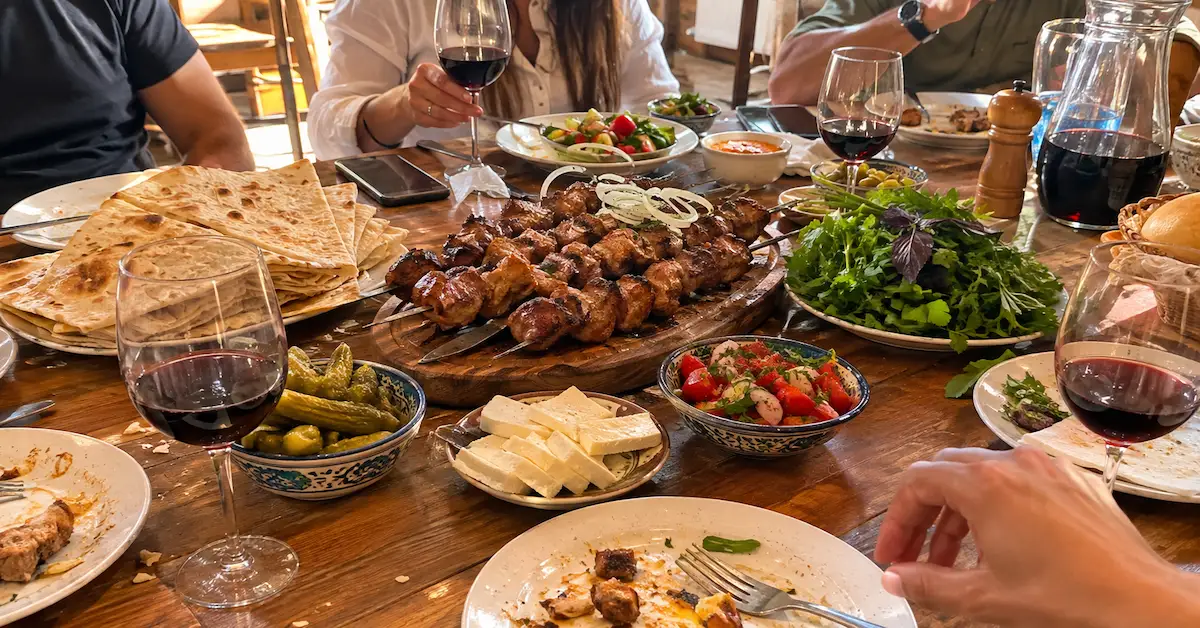
There is a moment we see often with guests who come to Armenia after a week in Georgia. They sit down for their first proper meal in Yerevan, look at the table, and say some version of the same thing. “This is not what we expected.”
They are right. The two cuisines share a border and a few ingredients, but they do not feel alike.
This guide from Travel Door, a Tbilisi based DMC running routes across Armenia and Georgia, covers Armenian food the way we explain it to guests before they order. Dish by dish, and just as importantly, region by region.
What Is Armenian Food Like?
Armenian food is built on grilled meat, flatbread, fresh herbs, dairy and fruit. It is not spicy. Flavour comes from herbs, lemon, pomegranate and the grill rather than chilli. Lunch is usually the largest meal of the day, and portions are generous.
Armenian food at a glance
| Dish | What it is | Where it belongs |
| Khorovats | Barbecued meat over open flame | Everywhere, especially village meals |
| Lavash | Thin flatbread baked in a tonir | Every table in the country |
| Dolma | Stuffed grape or cabbage leaves | Everywhere, often at celebrations |
| Lahmajo | Thin flatbread with minced meat | Yerevan cafes and bakeries |
| Harissa | Slow cooked wheat and chicken | Comfort food, winter |
| Spas | Warm yogurt soup | Everywhere, often as a starter |
| Zhingyalov hats | Flatbread stuffed with greens | The south, Syunik and Artsakh roots |
| Khash | Rich broth from cow hooves | Winter mornings only |
| Gata | Sweet pastry baked in a tonir | Villages and roadside stops |
The Dishes You Will See Everywhere

Khorovats, the Armenian barbecue
If Armenia has a national dish, this is the strongest candidate. Khorovats is meat grilled over an open flame, usually pork, lamb or chicken, often with whole vegetables thrown on the coals beside it.
It is not a restaurant speciality so much as a social event. Families cook it in gardens, by rivers and on roadsides, and it is how most celebrations are fed.
The best versions we see are rarely in cities. A village khorovats cooked over vine cuttings tastes different, and that is not nostalgia talking, it is the fuel.
Lavash, the UNESCO listed bread

Lavash is a thin, soft flatbread baked by slapping the dough onto the inside wall of a tonir, a clay oven set into the ground. It arrives with everything.
Why lavash is more than bread
In 2014, UNESCO inscribed lavash on its Representative List of the Intangible Cultural Heritage of Humanity, under the title “Lavash, the preparation, meaning and appearance of traditional bread as an expression of culture in Armenia.”
The listing is not about taste. UNESCO noted that making lavash “requires great effort, coordination, experience and special skills” and that the process “strengthens family, community and social ties.”
It was Armenia’s fourth entry on that list, as the Armenian Ministry of Foreign Affairs recorded at the time.
Fresh lavash wraps khorovats. Dried lavash gets broken into khash. Watch how it is used and you learn a lot about the meal in front of you.
What we tell guests: if you get the chance to see lavash made in a tonir, take it. Guests who have watched it once never look at the bread basket the same way again.
Dolma
Dolma, also called tolma, is vine leaves or cabbage leaves wrapped around a filling. The classic version uses minced meat and rice, but summer brings pasuts dolma, a meat free version with lentils and beans.
Lahmajo
A very thin round of dough spread with minced meat, herbs and spice, baked fast and hot. People call it Armenian pizza, which undersells it. Squeeze lemon on it, roll it, eat it with your hands.
It is the best quick lunch in Yerevan, and the cheapest thing on most menus.
Harissa and spas
Harissa is wheat and chicken cooked down slowly until the two become one thick, savoury porridge. It is comfort food with a heavy history behind it.
Spas is a warm yogurt soup with wheat and herbs. It sounds unusual to most visitors and converts almost all of them.
Regional Dishes Worth Planning Around

Here is what most food guides miss. Several of Armenia’s best dishes belong to specific regions, and you eat them properly by being there.
| Dish or drink | Region | Which route it fits |
| Zhingyalov hats | Syunik, Artsakh roots | Southern route toward Tatev |
| Areni wine | Vayots Dzor | Khor Virap and Noravank day |
| Gata | Villages near Garni, Geghard | Garni and Geghard day trip |
| Khash | Nationwide, winter mornings | Any winter trip |
| Mountain honey, herbs | Dilijan, Lori | Sevan and Dilijan, Debed Canyon |
| Ararat brandy | Yerevan | City day |
Zhingyalov hats in the south
A flatbread packed with a dozen or more wild greens and herbs, then cooked on a flat pan. No meat, no cheese, just greens.
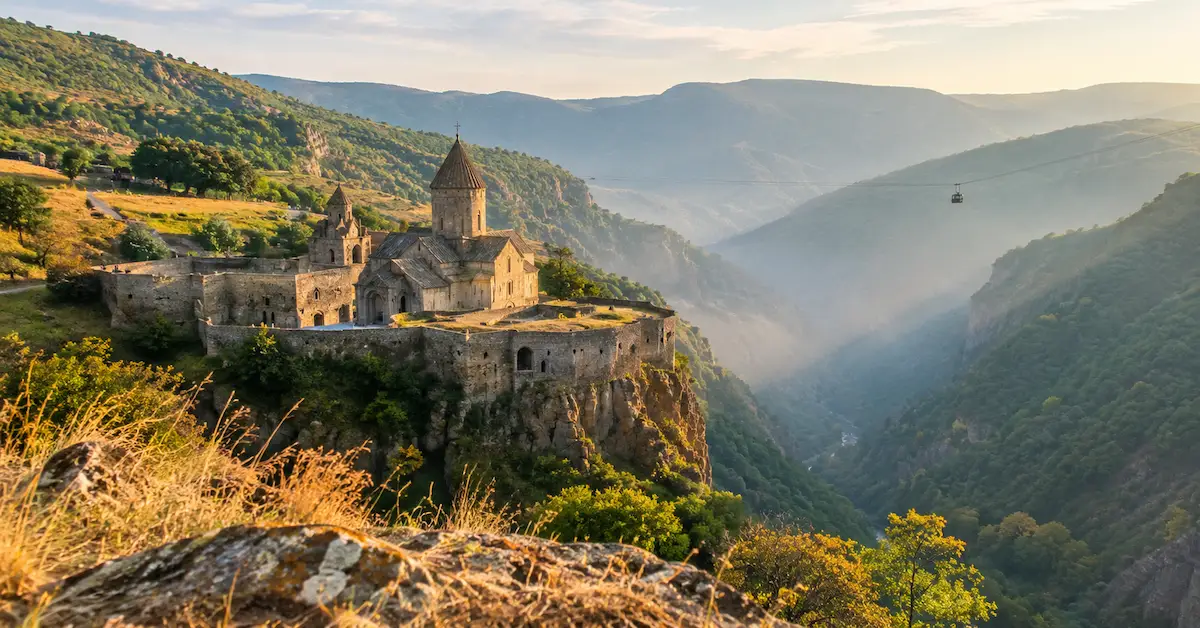
It comes from Artsakh and is most associated with Syunik in the south. You will find it in Yerevan now, but it tastes different where it is made daily, which is along the road our Tatev Monastery route follows.
Khash, a winter morning tradition
Khash is a clear, rich broth made by boiling cow hooves overnight. It is eaten in the cold months, early in the morning, with garlic, dried lavash crumbled in, and usually a small glass of vodka.
That is the part worth knowing. Khash is not a dinner dish, and it is not a summer dish. If someone invites you to khash, it will be at around seven in the morning, in winter, and it is a genuine honour.
Gata and sweets by region
Gata is a sweet pastry, layered with a buttery sugar filling and baked in a tonir. Different regions shape and sweeten it differently.
The stalls on the road near Garni and Geghard sell it fresh and warm, which is why we usually build a stop into the Garni and Geghard day trip.
Armenian Drinks: Wine, Brandy and More
Armenian wine and the Areni region
Armenia has a long winemaking history, and the heart of it is Areni in the Vayots Dzor region. The area grows indigenous grapes that you will not meet anywhere else.

Areni sits directly on the southern road between Khor Virap and Noravank, which is why tastings are easy to work into a day. Our Khor Virap and Noravank route passes straight through it.
Ararat brandy
Armenian brandy is the country’s most famous export, often called the cognac of the Caucasus. The Ararat brandy factory in Yerevan runs tastings and is one of the most booked single stops on our Yerevan city tour.
Non alcoholic options
Plenty, and some of them are the most Armenian things on the menu.
- Tan, a salted yogurt drink, served cold
- Fresh pomegranate and apricot juice, pressed in front of you
- Armenian coffee, strong, unfiltered, served in small cups
- Mountain herb tea, especially in Dilijan and the north
Is There Vegetarian Food in Armenia?
Yes, and more than the meat heavy reputation suggests. The trick is knowing what to ask for.
Dishes that work without meat
- Zhingyalov hats, greens only by definition
- Pasuts dolma, the lentil and bean version
- Spas, the yogurt soup
- Lavash with cheese and fresh herbs
- Grilled vegetable khorovats, cooked on the same coals
- Eetch, a bulgur and tomato salad
- Mushroom and bean dishes, common in village cooking
What to say at a restaurant
Say “banjareghen” for vegetables, or simply “without meat”. Most places outside the main tourist streets will adapt a dish rather than turn you away.
Vegans should be more careful. Yogurt, butter and cheese are everywhere, including in dishes that look plant based.
Pork, Halal and What GCC Travelers Should Know
A large share of our guests come from the Gulf, and this is the question they ask first. It deserves a direct answer rather than a vague one.
Where pork appears on a menu
Pork is common in Armenia and is one of the standard meats for khorovats. It will often be the default unless you specify otherwise.
The practical fix is simple. Ask for lamb or chicken khorovats specifically, and confirm before the order goes to the grill rather than after.
Finding halal options in Yerevan
Yerevan has a growing number of Middle Eastern and Persian restaurants, many of which serve halal, reflecting the Lebanese, Syrian and Iranian Armenian communities in the city.
Outside Yerevan, dedicated halal restaurants are far less common. If this matters for your trip, tell us at the planning stage. It changes which restaurants we build into a route, and it is much easier to arrange in advance than on the day.
What we tell guests: the dishes that work regardless of dietary restriction are lavash, cheese, herbs, zhingyalov hats, spas and the fruit. Those are also, not coincidentally, some of the best things on the table.
How Armenian Food Differs from Georgian Food
Both are Caucasus cuisines, both involve bread, cheese and hospitality, and both will overfeed you. The differences are real though.
Georgian food leans on walnut sauces, cheese filled breads and herb pastes. Armenian food leans on the grill, on fresh green herbs eaten raw by the handful, and on fruit, especially apricot and pomegranate.
If you are doing both countries, our Georgian food guide covers the other side. Eat them a week apart and the contrast is obvious.
Where to Eat: Markets, Tonirs and Village Tables
GUM Market in Yerevan
Not a shopping mall. GUM Market is Yerevan’s main food market, and the place to try dried fruit, sujukh, cheeses, spices and pickles. Vendors expect you to taste before buying and will be insulted if you do not.

It is one of the better hours you can spend in the capital.
Village lavash baking and tonir cooking
Watching lavash go into a tonir is a short, memorable experience, and several villages near the main day trip routes offer it. Ask us if you want it in your itinerary rather than hoping to stumble on it.
Eating outside Yerevan
Food gets cheaper and often better the further you go from the capital. Roadside stops in Dilijan, village tables near Gyumri and the guesthouses of the Debed Canyon serve food that no Yerevan restaurant quite matches.
Menus outside the capital are often Armenian only. Point, smile, and you will eat well.
What a Meal Actually Looks Like
Meal timing and portion size
Lunch is the main event, usually eaten late, between one and three. Dinner tends to be lighter unless it is a celebration, in which case it is not light at all.
Starters arrive in quantity. Resist the urge to finish them, because the grilled meat is still coming.
Hospitality and toasts
If you are invited to an Armenian table, expect to be fed past the point of comfort and toasted repeatedly. Refusing food politely is harder than it sounds.
Toasts follow a loose order, and guests are often invited to give one. A short, sincere thank you is all that is needed.
What Guests Tell Us After Their First Armenian Meal
Two comments come back more than any others.
The first is about herbs. Visitors are often surprised to be handed a whole plate of raw greens to eat alongside the meal rather than chopped into it. It takes one meal to get used to and then it is missed.
The second is about quantity. Guests who ordered confidently on day one order far more cautiously by day three, once they understand how much food a standard order actually produces.
Season matters too. Khash and harissa are winter dishes, while the fruit, the herbs and the outdoor khorovats are at their best from late spring onward. Our best time to visit Armenia guide covers how the seasons shift.
A Note from Our Team
“The food question we get most is whether Armenian food is just like Georgian food. It is not, and the quickest way to prove it is zhingyalov hats and a plate of raw herbs. We tell guests to eat lunch properly, keep dinner light, and say yes if anyone invites them to a family table. That last one is where the real food is.”
Travel Door Operations Team, Tbilisi
Frequently Asked Questions
What is the national dish of Armenia?
Khorovats, Armenian barbecue, is the strongest candidate. Dolma and harissa are also widely considered national dishes, and all three appear at celebrations.
What is khorovats?
Khorovats is Armenian barbecue, meat grilled over an open flame, usually pork, lamb or chicken, often with vegetables cooked alongside on the coals.
What is lavash bread?
Lavash is a thin flatbread baked on the wall of a clay tonir oven. UNESCO inscribed it on its Intangible Cultural Heritage list in 2014 as an expression of Armenian culture.
Is Armenian food spicy?
No. Armenian cooking uses herbs, lemon, pomegranate and garlic rather than chilli heat. Dishes are flavourful but mild.
What is Armenian food similar to?
It shares elements with Georgian, Middle Eastern and Persian cooking, but it leans more on grilled meat, raw herbs and fruit than its neighbours.
Is there vegetarian food in Armenia?
Yes. Zhingyalov hats, pasuts dolma, spas, grilled vegetables, lavash with cheese and herbs, and bulgur salads are all widely available.
What do Armenians drink?
Armenian wine from the Areni region, Ararat brandy, and non alcoholic options including tan, a salted yogurt drink, Armenian coffee and fresh pomegranate or apricot juice.
What should I eat in Yerevan?
Lahmajo for a quick lunch, khorovats for a full meal, and a trip to GUM Market for dried fruit, cheese and spices. Add a brandy tasting if you have an evening free.
Taste Armenia on a Route We Plan for You
Most of Armenia’s best food is tied to a place. Zhingyalov hats belong to the south, Areni wine to the road between Khor Virap and Noravank, warm gata to the villages near Garni.
That means a food focused trip is really a routing decision. We can build lavash baking, a cellar tasting or a village lunch into a day rather than leaving it to chance, and we can plan around halal or vegetarian needs if you tell us early.
Our day trips from Yerevan guide show how the routes fit together. When you are ready, send us your dates and we will shape a route around what you want to eat as well as what you want to see.