Skip to content

The question comes up often with guests who arrive in Yerevan after a week in Georgia. They have done Kakheti, met qvevri wine, and then someone asks, half surprised, “wait, Armenia makes wine too?”
Armenia does. The oldest winery ever found anywhere sits two hours south of Yerevan.
This guide from Travel Door, a DMC running routes across both Armenia and Georgia, covers wine tasting in Armenia properly. The grapes you will see on a tasting list, what a karas is, what actually happens at a winery, and how to fit it into your trip.
Is Armenia Worth Visiting for Wine?
Yes. Armenia holds the world’s oldest known winery at Areni-1, grows roughly 400 indigenous grape varieties, and its vineyards are almost entirely ungrafted. The main wine region, Vayots Dzor, sits about two hours south of Yerevan, and tastings can also be done in the capital itself.
Armenian wine at a glance
| Topic | Short answer |
| Oldest winery | Areni-1 cave, around 4100 BCE |
| Signature red | Areni Noir |
| Signature white | Voskehat |
| Main region | Vayots Dzor, around Areni village |
| Closest region to Yerevan | Aragatsotn, about one hour |
| Traditional vessel | Karas, a buried clay amphora |
| Typical tasting | Around 90 minutes, booked ahead |
| Best season | September and October |
Why Armenia Claims the World’s Oldest Winery
In 2007, archaeologists excavating a cave near Areni village found a wine press, fermentation vats, storage jars and grape seeds, all dating to around 4100 BCE.
The DNA in those seeds matched Areni Noir, the grape still grown in the valley today. The grape in your glass descends from the one pressed in that cave six thousand years ago.

How that differs from Georgia’s claim
Both countries claim wine’s origins, and both are right, because they are claiming different things. Georgia has the oldest evidence of wine itself, residue in clay vessels going back around 8,000 years. Armenia has the oldest known winery, an actual production site.
The cave is open to visitors and sits beside the main southern highway, which makes it an easy stop on a wine day.
What we tell guests: there is no need to pick a side. If you are doing both countries, you are visiting two halves of the same story.
The Armenian Grapes You Should Know
This is where most visitors feel lost, and where a little knowledge changes the whole day.
| Grape | Colour | Tastes like | Where it grows |
| Areni Noir | Red | Sour cherry, herbs, soft tannins | Vayots Dzor |
| Voskehat | White | Peach, apricot, wildflower | Across the country |
| Khndoghni | Red | Dark fruit, firm tannins | Southern Armenia |
| Haghtanak | Red | Deep colour, bold structure | Aragatsotn, Armavir |
| Kangun | White | Light, fresh, often blended | Widely planted |
Areni Noir, the flagship red
If you drink one Armenian wine, make it this. Light in colour, fresh in acidity, soft tannins, sour cherry and herbs.
People compare it to Pinot Noir constantly, and on the palate that is fair. Genetically the two are unrelated, which makes the resemblance more interesting rather than less.
Voskehat, the queen of whites
Voskehat means “golden seed”. Made conventionally it is a medium bodied white with stone fruit and spice. Made in clay with skin contact it turns amber and structured, closer in feel to a light red.
You will also meet Khndoghni, Haghtanak and Kangun on tasting lists. Ask the host which one they are proudest of. That question produces better wine and better conversation than anything else.
Why almost every Armenian vine is ungrafted
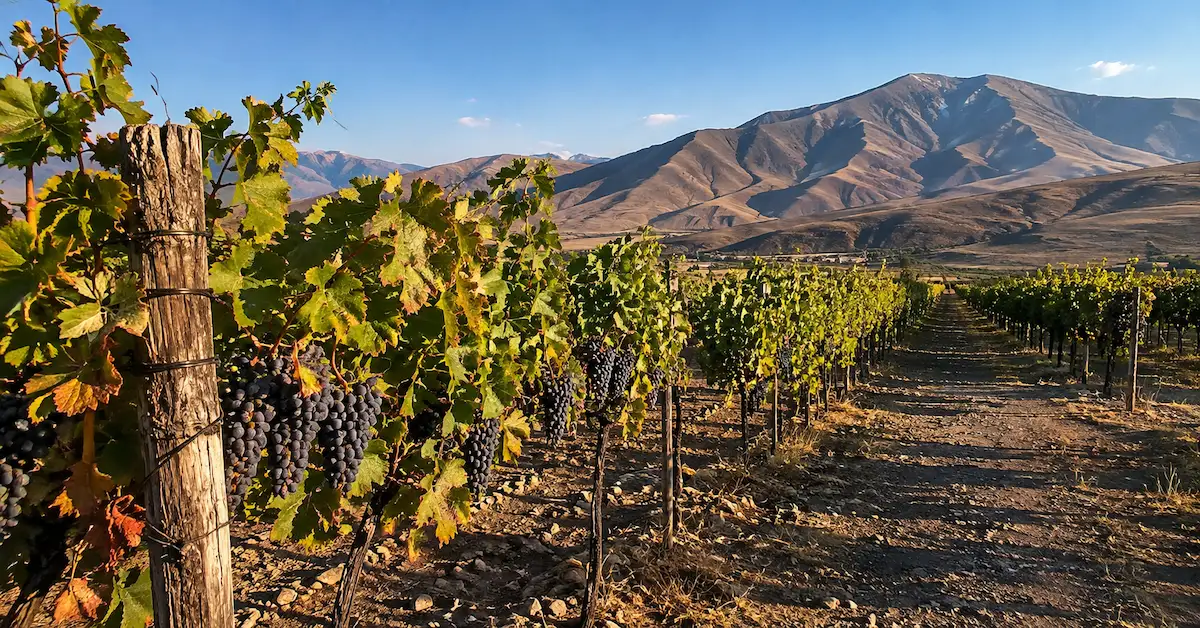
Phylloxera, the louse that destroyed Europe’s vineyards in the 1800s, never took hold in Armenia. Armenian vines still grow on their own roots, and some mountain vineyards are close to two centuries old.
In global wine terms this is rare, and it is one reason serious attention is turning this way.
What Is a Karas?
A karas is a large clay amphora, buried roughly two thirds into the ground, used to ferment and age wine. If you have been to Georgia, you have met its cousin, the qvevri.

They are not the same thing with different names. One honest distinction: the Georgian qvevri method carries a UNESCO Intangible Cultural Heritage listing. Armenian karas winemaking does not, despite being equally old.
Clay breathes in a way steel does not. Karas wines tend to have more texture and an earthier edge. Several producers now run both styles side by side, which makes for the most interesting tasting you can do here.
What Actually Happens at an Armenian Winery
Most visitors have no picture of this before they arrive, so here it is plainly.
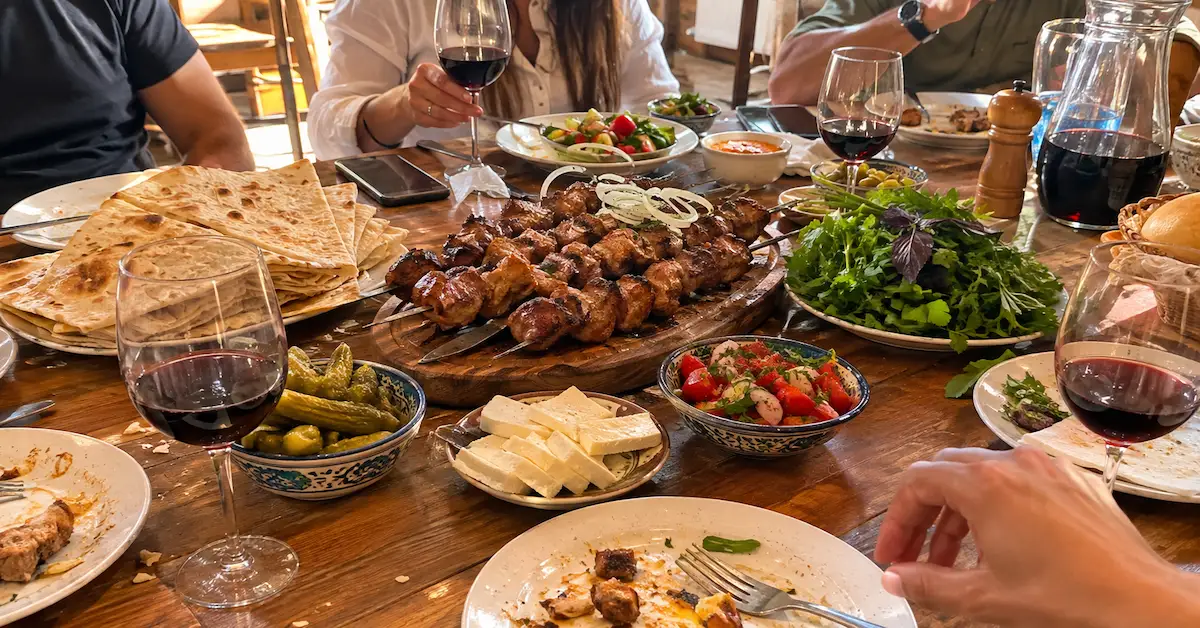
A standard visit runs around ninety minutes and follows a familiar shape. A short walk through the vineyard or cellar, an explanation of how the wine is made, then a seated tasting of four to six wines, usually with bread, cheese and sometimes dried fruit.

Several wineries serve a full lunch instead of a snack, which turns the stop into a two or three hour affair.
Two things worth knowing. The pours are real, not thimbles, which matters if you are driving. And you can almost always buy at the cellar door, often at prices you will not find in Yerevan shops.
Armenia’s Wine Regions
Armenia has five wine regions between roughly 800 and 1,800 metres of elevation. Three matter most to visitors.
Vayots Dzor and the Areni Wine Route
The heartland, built around Areni village in the south. The formal Vayots Dzor Wine Route covers six wineries: Momik, Hin Areni, Trinity Canyon, Old Bridge, Areni Wine Factory and Getnatoun.
The stretch is compact, roughly 14 kilometres from Areni village to Old Bridge, so two or three tastings fit comfortably into a day.
Hin Areni shows the ambition here. Founded in 2013, it works a 32 hectare ungrafted vineyard at 1,250 metres, growing only Areni Noir and Voskehat.
Aragatsotn and Armavir, west of Yerevan
Almost nobody writes about these regions, which is a shame, because they sit about an hour from the capital rather than two.
This is where you find estates like Van Ardi in Sasunik village, ArmAs, Voskevaz and Voskeni. Voskevaz ferments in karas and ages in Armenian oak, which makes it a good stop for anyone curious about the traditional method.
For travellers short on time, or anyone with an early flight, this is the practical alternative to the drive south.
The Ararat valley
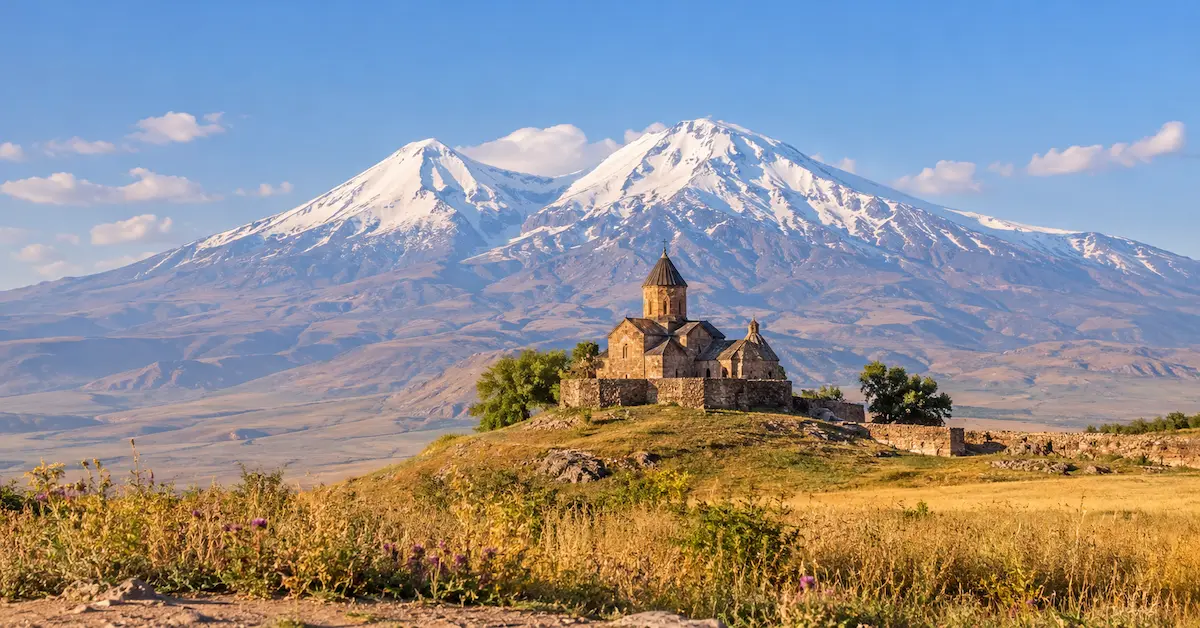
The emerging region, and the one most likely to become Armenia’s wine tourism centre. Vineyards here sit with Mount Ararat filling the horizon.
Can You Taste Armenian Wine Without Leaving Yerevan?
Yes, and a surprising number of guests end up doing exactly this.
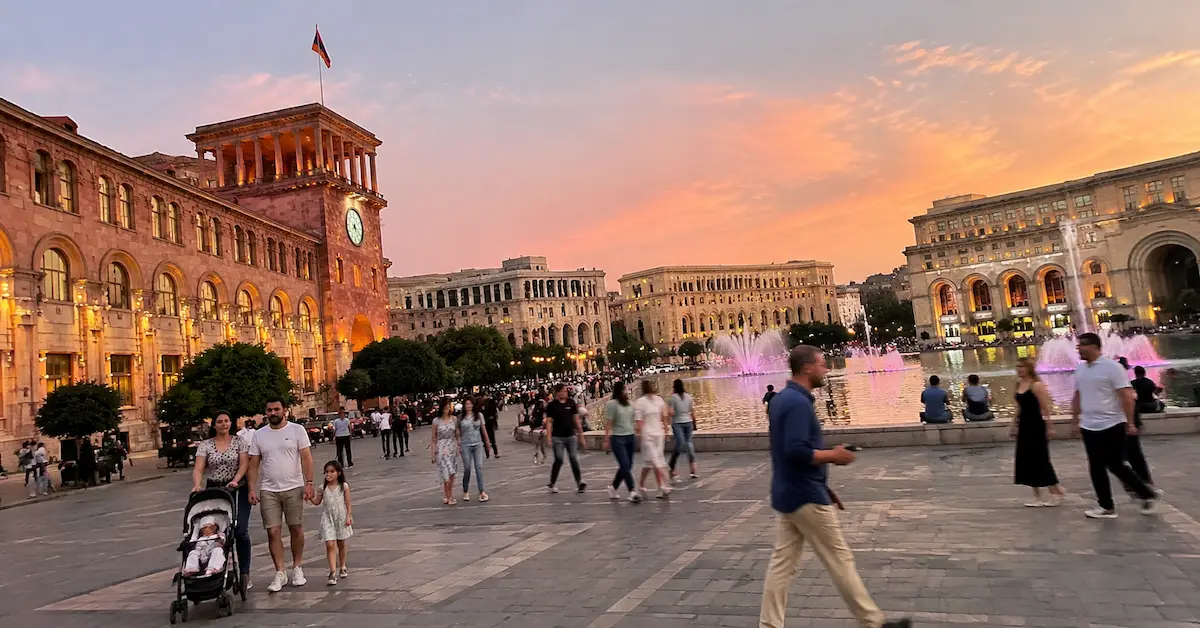
Yerevan has a real wine bar culture, concentrated around Saryan Street, where you can work through a range of Armenian producers in an evening without travelling anywhere. Bars here pour by the glass, which is the cheapest way to find out which grape you actually like.

There are also wineries operating inside the city that run tours and seated tastings, so a proper cellar experience is possible without a full day out.
What we tell guests: if your trip is short, do a Saryan Street evening early on. You will arrive at the cellars already knowing whether you prefer Areni Noir or Voskehat, and the day gets far more out of you.
How to Plan a Wine Day from Yerevan
Distance and realistic timing
Areni is about two hours each way. Add two tastings at ninety minutes each, lunch and the Areni-1 cave, and you have an eight to ten hour day.

Aragatsotn is closer to an hour out, which suits travellers with less time.
Booking ahead, and why it matters
This is the mistake we see most. Armenian wineries are small, and most need reservations at least 24 hours ahead. Several are family operations where the person pouring is also the person who made the wine.
Turning up unannounced often means a locked gate. It is not unfriendliness, there is simply nobody rostered to receive you.
What a wine day costs
Costs vary more than people expect. A tasting at a small family winery is modest, while estates that include a full vineyard lunch sit considerably higher. Transport is usually the larger line in the budget, not the wine.
Two things reduce the total. Tasting fees are often waived or deducted if you buy a bottle, and sharing a vehicle across a group costs the same whether two or six people travel.
Combining wine with Khor Virap and Noravank
The geography is a gift. The southern highway passes directly below Khor Virap, with its view of Mount Ararat, and Noravank sits in a red rock canyon just past the wine villages.
That is why our Khor Virap and Noravank route and our Armenia Wine Route share so much road. If wine is the priority, the wine route goes deeper into the cellars.
Self drive versus a driver
Stated plainly. Tasting flights involve real pours, Armenian drink driving laws are strict, and the mountain roads are not forgiving.
If your group is two people and only one drinks, self drive can work. For everyone else a driver is the sensible answer, and it also means somebody handles the reservations.
Armenian Brandy, the Other Half of the Story
Armenia’s wine industry nearly disappeared in the twentieth century for economic reasons. Under the Soviet system the country was assigned brandy production, vineyards were replanted with varieties suited to distillation, and table wine collapsed. The revival only began around 1994.
When you taste Armenian wine today, you are tasting a thirty year rebuild on a six thousand year foundation.
The historic Ararat and Noy brandy houses both sit in Yerevan and run tastings. The Ararat factory is one of the most popular stops on our Yerevan city tour. Treat it as a separate experience, since these places pour brandy, not table wine.
What If Not Everyone in Your Group Drinks?
A good share of our guests come from the Gulf, and this question comes up before almost every wine day we arrange.
Quite a lot of the day is not about drinking. The Areni-1 cave is an archaeological site, the vineyards sit at altitude with mountain views, and Noravank’s canyon is one of the most dramatic drives in the country. Several wineries also produce grape juice and serve proper food.
If some of your group do not drink, tell us at the planning stage rather than on the day. We can build a southern day around the cave, the monasteries and a long lunch, with tastings as an optional stop for whoever wants one.
Armenian Wine vs Georgian Wine
Georgia has the larger industry, better developed wine tourism and the famous qvevri. Its signature grape, Saperavi, makes dark, inky, powerful reds.
Armenia is smaller and newer in its revival. What it has instead is Areni Noir, lighter and more aromatic, plus genuinely ancient ungrafted vines.
Do not expect a second helping of Kakheti. Our Georgian food guide covers the other side if you are planning both.
When to Go
The Areni Wine Festival takes place every October in Areni village. Producers from across the region pour, and the whole valley turns up. It is the best day of the year to visit and also the busiest, so book well ahead.
September and early October are peak more generally. Winter visits work but are quieter, and some small producers reduce hours. Our best time to visit Armenia guide covers the southern routes in more detail.
What Guests Say After Their First Tasting
Two reactions repeat. The first is surprise at how light Areni Noir is. People expecting something dark and heavy get a fresh, red fruited wine, and it usually takes a second glass before they decide they like it.
The second is about scale. People arrive expecting an industry and find families. The winemaker pours, explains, and often brings out something not on the list.
Pair it with the food and it makes more sense still. Our Armenian food guide covers what lands on the table alongside these wines.
A Note from Our Team
“Guests who have done Georgia arrive expecting a smaller version of the same thing. It is not that. The grapes are different, the vessels are different, the scale is completely different. Our advice is simple. Do not try to fit four wineries into a day. Do two properly, talk to the people pouring, and leave time for the cave and the canyon.”
Travel Door Operations Team, Tbilisi
Frequently Asked Questions
Is Armenia the birthplace of wine?
Armenia holds the world’s oldest known winery, at the Areni-1 cave, dating to around 4100 BCE. Georgia holds the oldest evidence of wine itself. Both claims are accurate and describe different discoveries.
What is Areni Noir?
Armenia’s signature red grape, grown mainly in Vayots Dzor. Light in colour with fresh acidity, soft tannins and sour cherry notes, often compared to Pinot Noir despite being genetically unrelated.
What happens at an Armenian wine tasting?
A typical visit runs around ninety minutes: a cellar or vineyard walk, an explanation of the winemaking, then a seated tasting of four to six wines with bread and cheese. Many wineries sell at the cellar door.
How far is Areni from Yerevan?
About two hours each way. A full wine day including tastings, lunch and the Areni-1 cave runs roughly eight to ten hours.
Do you need to book a winery visit in Armenia?
Yes, in most cases. Wineries are small and typically need at least 24 hours notice. Arriving without a reservation often means finding nobody there.
Can you taste Armenian wine in Yerevan?
Yes. Saryan Street has a cluster of wine bars pouring Armenian producers by the glass, and there are wineries inside the city running tours and tastings.
What is a karas?
A large clay amphora, buried about two thirds into the ground, used to ferment and age wine. It is the Armenian equivalent of the Georgian qvevri.
When is the Areni Wine Festival?
Every October, in Areni village. Book transport and accommodation in advance.
Plan a Wine Route We Build Around Your Taste
A wine day in Armenia is a routing decision. Two hours south gets you the historic cellars, the Areni-1 cave and the Noravank canyon. An hour west gets you modern estates and an earlier finish. An evening on Saryan Street gets you the grapes without leaving the city.
Which suits you depends on your time, your group and how much of the day you want spent in a car. We can also build the day around non drinkers if that applies.
Have a look at our Armenia Wine Route, or see how it fits alongside everything else in our day trips from Yerevan guide. When you are ready, send us your dates and we will handle the reservations.